So you wanna put on some lean muscle mass. And you want to do it within the context of the Primal Blueprint, but aren’t sure where to start. It’s a common question and it’s about time I addressed it head on.
As I’ve made pretty clear, our ultimate goal is to achieve positive gene expression,
functional strength, optimum health, and extended longevity. In other
words: To make the most out of the particular gene set you inherited.
These are my end goals, and I’ve modeled the PB Laws
with them in mind. But that doesn’t mean packing on extra muscle can’t
happen with additional input. After I retired from a life of chronic cardio
and started living Primally, I added 15 pounds of muscle, while keeping
low body fat levels without really trying, so it’s absolutely possible
for a hardgainer to gain some. The question is how much and at what
expense?
I’d be the first to tell you that lean body mass is healthier than adipose tissue. Generally, the more lean mass a
person has, the longer and better they live. But to increase mass at the expense of agility, strength, or speed is, in my opinion, counterproductive. What would Grok do – go for enormous biceps or the ability to haul a carcass back to camp? Unless you’re a bodybuilder (nothing wrong with that, mind you; it’s just not my focus), I can’t advise simply packing on size without a proportional increase in actual strength. Those bulging biceps might look good on the beach, but then again, so does the body that comes with keeping up with the younger guys, knocking out twenty pull-ups in a row, and lifting twice your bodyweight. Form is best paired with a healthy serving of function. The two are quite delicious together, and, luckily, following the PB allows us to get both without sacrificing either.
person has, the longer and better they live. But to increase mass at the expense of agility, strength, or speed is, in my opinion, counterproductive. What would Grok do – go for enormous biceps or the ability to haul a carcass back to camp? Unless you’re a bodybuilder (nothing wrong with that, mind you; it’s just not my focus), I can’t advise simply packing on size without a proportional increase in actual strength. Those bulging biceps might look good on the beach, but then again, so does the body that comes with keeping up with the younger guys, knocking out twenty pull-ups in a row, and lifting twice your bodyweight. Form is best paired with a healthy serving of function. The two are quite delicious together, and, luckily, following the PB allows us to get both without sacrificing either.
Of course, we’re all built a little differently. The basic building
blocks are the same in everyone, but sexual reproduction (as opposed to
asexual reproduction) has the funny habit of producing unique genetics
and small variations that affect the way we respond to our environments.
It’s why some people are short and some are tall, or why some of us
respond better to carbohydrates than others. Even though we all pretty
much operate the same way, there IS a range of possible outcomes that is
proscribed by your direct ancestors. By that same token, some people
just naturally have more muscle mass. They’re usually innately more
muscular than the average person, and putting more on through resistance
training is often an easy task. Then there are those who can’t seem to
gain a pound: the hardgainers.
They might be increasing strength, but it doesn’t seem to translate
into visible muscle mass. Now, my initial advice for a hardgainer is
this – don’t worry too much about it! As long as you’re getting
stronger, you’re doing it right.
Let’s face it, though. You’ve probably heard that enough already.
It’s fun being the lanky guy at the gym who can lift more than most, but
you’re dead set on bulking up (who doesn’t like a bit more muscle to go
along with that strength?), and you want to do it in a Primal context.
Besides, continuing to increase strength will eventually require
increasing size. To do so, you have to target the very same anabolic
hormones that others use to get big, only with even more enthusiasm and
drive. Like I said, we all have similar engines, but some require more
fuel and more efficient driving (sorry for the corny analogy).
Activating these hormones will work for anyone, provided they work hard
and eat enough food.
The main hormones that contribute to muscle anabolism
are testosterone, growth hormone (GH), and insulin-like growth factor-1
(IGF-1). A little more about each and how to utilize them:
Testosterone
Crazy bodybuilders don’t inject themselves with anabolic steroid
hormones that are based on testosterone for nothing. Among other roles,
testosterone is an important muscle-building growth factor that favorably affects protein synthesis
in addition to working with other hormones (like GH and IGF-1) to
improve their function (more on this later). If you want to increase
strength and build muscle, testosterone is absolutely required (don’t
worry, though: no injections necessary!).
Growth Hormone
It’s right there in the name, isn’t it? Growth hormone. It
helps muscle grow and, perhaps more importantly, it burns body fat.
After all, leaning out is a big part of building muscle (or else you’ll
just look puffy) and GH will help you do it.
Insulin-like Growth Factor 1
IGF-1 is extremely similar in effect to GH, as it should be – GH
stimulates IGF-1 production in the liver. In fact, it’s suspected that
IGF-1 is actually responsible for most of the “growth-promoting effects of circulating GH.”
Anabolic hormones all work together.
In fact, to maximize their muscle-building potential, you must have all
three present. Testosterone increases IGF-1, but only in the presence
of GH. GH promotes skeletal muscle cell fusion independent of IGF-1, but
the two are most effective in concert.
Luckily for you, the types of exercises that stimulate the secretion of
one will generally stimulate the secretion of the others. Funny how
that works out, huh?
Enter The Central Nervous System
In order for your body to start pumping out these delicious anabolic
hormones, you must first give it a reason to do so. I might even say you
should give your genes a reason to express themselves. The most
effective way to do this is by notifying the central nervous system.
Now, the CNS can be a stubborn bastard, but he’s all you got when it
comes to interpreting stimuli and relaying messages to the rest of the
body. He’s not easily perturbed, and he won’t bother if you aren’t
serious. If you insist on doing nothing but light aerobics or tiny
isolation exercises, your CNS will barely notice. If you want to get
your CNS’ attention, pick up the intensity. Run some sprints or do some heavy lifting.
When you do an exercise like the squat with a heavy weight, all hands
are on deck. Your CNS realizes that some serious exercising is going
down and notifies the hypothalamus, which in turn talks to your
pituitary gland. This tiny – but vital – member of the endocrine system
is the gland that dispatches luteinizing hormones to tell the testicles
to secrete testosterone. It’s also the gland that synthesizes and
secretes GH. IGF-1 is mostly produced by the liver, but its production
is facilitated by the presence of GH, so we can see that it all comes
down to CNS stimulation. Chronic cardio
doesn’t affect your CNS in any meaningful way, so that’s why we tend to
avoid it; vigorous sprints, hard and heavy lifting, and anaerobic
output will get its attention, so do plenty of these to maximize muscle
growth.
Cortisol: A Hormone to Avoid
Promoting muscle and strength growth also requires avoiding excess amounts of catabolic (muscle wasting) hormones like cortisol. Cortisol is the major stress hormone,
and it exists for a very legitimate reason (dealing with “flight or
fight” incidents, inadequate sleep, anxiety), but in large amounts
cortisol increases serum amino acids by breaking down muscle, inhibiting
protein synthesis and reducing amino acid uptake by the muscles – all
awful things for muscle growth. Compounding the problem even further,
the broken-down muscle is converted into blood glucose, which then
raises insulin secretion and increases insulin resistance while
promoting fat storage. And we all know how great those muscles look with
a nice layer of adipose tissue covering them up! On a serious note,
most people following the PB already minimize cortisol by getting plenty
of sleep and reducing stress, but if you’re preoccupied with building
muscle mass and engaging in extended workout sessions to achieve it,
avoiding excess cortisol can get tricky: excessive exercise without
enough recovery time actually increases cortisol. It makes sense (think
of it like your body’s telling you it needs a day or two off), but the
desire for more muscle mass drives many to work out to the point of
counter-productivity. Just be careful, and give yourself at least a day of rest after a particularly grueling session.
Lift Really Heavy Things
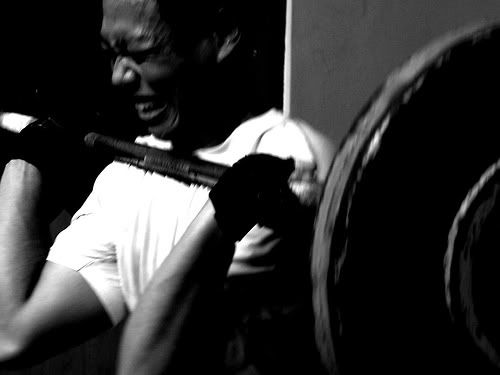
If you haven’t figured it out already, you’re going to be doing some
heavy lifting in order to put on lean mass. The foundation of your
routine should be the big compound lifts: squats, deadlifts, presses (bench and overhead), pull-ups, rows, dips, snatches, power cleans, clean and jerks. These engage multiple muscles while triggering your hormonal response systems. Bodyweight stuff, while valuable, simply isn’t going to get you the strength and mass increases you’re looking for. Testosterone, while useful, only gets really anabolic when you start lifting.
You need to get under some decent weight, enough so that your CNS and
endocrine system are blasted, but not so much that you can’t maintain
proper form.
A popular routine is the 5×5 method. Popularized by programs like StrongLifts and Starting Strength,
doing compound lifts for five sets of five reps allows you to strike a
balance between strength building and superficial muscle hypertrophy.
Done this way, your hypertrophy won’t be purely sarcoplasmic,
which results in fluid-filled muscles that look big but don’t see a
corresponding increase in actual strength. Instead, the 5×5 method
promotes myofibrillar hypertrophy: hard, dense muscle fibers that increase strength and size (with no puffiness). That’s real muscle that would make Grok proud.
If you’re lifting heavy and lifting hard, keep your workouts spaced
at least a day apart and don’t lift more than 3x/week. Three exercises
per session should be perfect. That may not sound like much, but it’ll
be plenty if you do it right. Remember, you’re doing big compound
movements that will really shock your system, with an emphasis on
intensity and power. You don’t want to overwork yourself, release a
bunch of cortisol, and set yourself back a few weeks.
Squats and deadlifts are absolutely required. No excuses. They engage
the most muscles and produce the biggest hormonal response. They will
be the bedrock of your mass building campaign. Most programs recommend
doing squats every session, and I tend to agree. You can handle it.
Deadlifts are a bit more taxing and so should be relegated to every
other workout. So, one week you’ll deadlift once, the next week twice.
You can also sub in power cleans for the occasional deadlifts (or do
them in addition) if you’re comfortable with such a complex movement.
Presses are paramount, both overhead and bench. I’d alternate both types
of presses every session. Pull-ups are great, but weighted pull-ups are
even better. Same goes for dips. Just try to get one pulling, one
pushing, and one squatting exercise in each session.
An example for beginners, with sets coming first in the sequence:
A
Squat 5×5
Pull-ups 5xFailure (add weight if “Failure” is becoming more than 12 reps)
Overhead Press 5×5
Squat 5×5
Pull-ups 5xFailure (add weight if “Failure” is becoming more than 12 reps)
Overhead Press 5×5
B
Squat 5×5
Deadlift 1/2/3×5 (your choice; deadlifts can be incredibly taxing, and with exhaustion comes poor form, so be careful; sometimes it’s better to do a really heavy load for a single set)
Bench Press 5×5
Squat 5×5
Deadlift 1/2/3×5 (your choice; deadlifts can be incredibly taxing, and with exhaustion comes poor form, so be careful; sometimes it’s better to do a really heavy load for a single set)
Bench Press 5×5
C
Squat 5×5
Pull-ups 5xFailure
Overhead Press 5×5
Squat 5×5
Pull-ups 5xFailure
Overhead Press 5×5
Do this sequence every week (maybe Monday, Wednesday, Friday) and
steadily increase the weight each session. Once you’re making progress,
feel free to add in other exercises like dips or more Olympic lifts. For
more mass, more lactic “burn” (and more GH secretion), reduce your rest periods between sets or even superset
them. If you feel like doing some cardio, stick to sprints once weekly,
or even a Crossfit-style metcon (metabolic conditioning) workout, maybe
some Tabata
burpees. The key is conserving strength and giving your body time to
rest and recover for the next round of squats, deadlifts, and presses.
This “program” can be tweaked and altered. Just make sure you’re
doing big movements while maintaining extreme intensity and great form.
Oh, and always make sure to squat and deadlift. Always. They produce the
most testosterone, GH, and IGF-1.
Eat Lots (I Mean Lots) of Plants and Animals
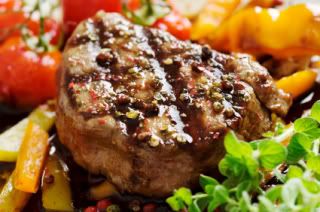
No one would ever call the Primal Blueprint a protein-sparing plan, but you’re going to have to eat even more than before. Stuff yourself. I always say that body composition is 80% diet,
and that goes for putting on mass as well as losing fat. You need to
provide plenty of protein for all those hormones to synthesize, after
all.
- Never let your protein intake go lower than 1g/lb of body weight when you are aiming to add long-term muscle. It’s the building block of muscle, and your body is going to be starving for it.
- Eat plenty of saturated and monounsaturated fat. Fat blunts insulin secretion while increasing testosterone production. Insulin may be useful for stuffing your muscles full of glycogen, but that’s not what you’re going for… right?
- Dietary fat, in conjunction with all the GH you’ll be producing, also spares muscle wasting.
- You may have heard of the popular GOMAD method – Gallon of Milk a Day for easy mass-building. It undoubtedly works, but a gallon of milk isn’t exactly Primal and I can’t recommend it. Instead of milk, why not a dozen eggs a day? ADEAD? If you can manage it, eating them on top of your regularly scheduled meals is a great source of affordable protein, fat, and vitamins (Vitamin A in particular may have pro-anabolic effects).
- Eat often. If you’re going for pure size and strength, fasted workouts and skipped PWO meals may not be the ticket. You’ll burn more fat with the extra GH secretion and existing muscle will be spared, but you may be missing the chance at prime protein synthesis when you fast. A PWO meal of protein and fat will still blunt the insulin secretion and provide fuel for your muscles.
- Increase caloric intake. You’re going to be expending so much energy on the lifts (and you’ll continue to burn through it even on rest days) while eating clean, Primal foods (and keeping insulin low as ever) that fat accumulation shouldn’t be an issue at all. Eat!
- On those days when you do expend a ton of energy – maybe on your metcon or sprint day – having a Primal-friendly starch, like squash or sweet potato, is a decent way to replenish depleted glycogen stores.
- Eat a big piece of fatty meat every single day. Steak, whole chicken, lamb leg, organs, whatever. Just eat a solid piece of animal flesh for a powerful protein infusion on a daily basis.
- A hardgainer is often someone who doesn’t eat enough. Sure, genes play a role, but you can ultimately have a significant say in how those genes rebuild you. To a point. Eat more and lift harder to grab the reins.
I’m a firm believer in the body’s natural ability to achieve proper
homeostasis, provided we supply the right environment and the right
foods. For some of you, that might mean lower body mass, lower than
you’d like. In my opinion, that amount of muscle is probably “right” for
you and I wouldn’t recommend going above and beyond to achieve more of
it… but I also wouldn’t condemn it, especially if it’s pursued in
accordance with the Primal Laws. As for me, I am comfortable where I’m
at and tend not to seek added mass (I’m also at a point where lifting
heavy increases my risk of injury, and I HATE downtime). But if you are a
hard-gainer looking to add a few, as long as it’s not just show muscle
and you can actually lift some decent weight and at the very least
manipulate your own body weight comfortably, eat those dozen eggs and
gain that weight.

No comments:
Post a Comment